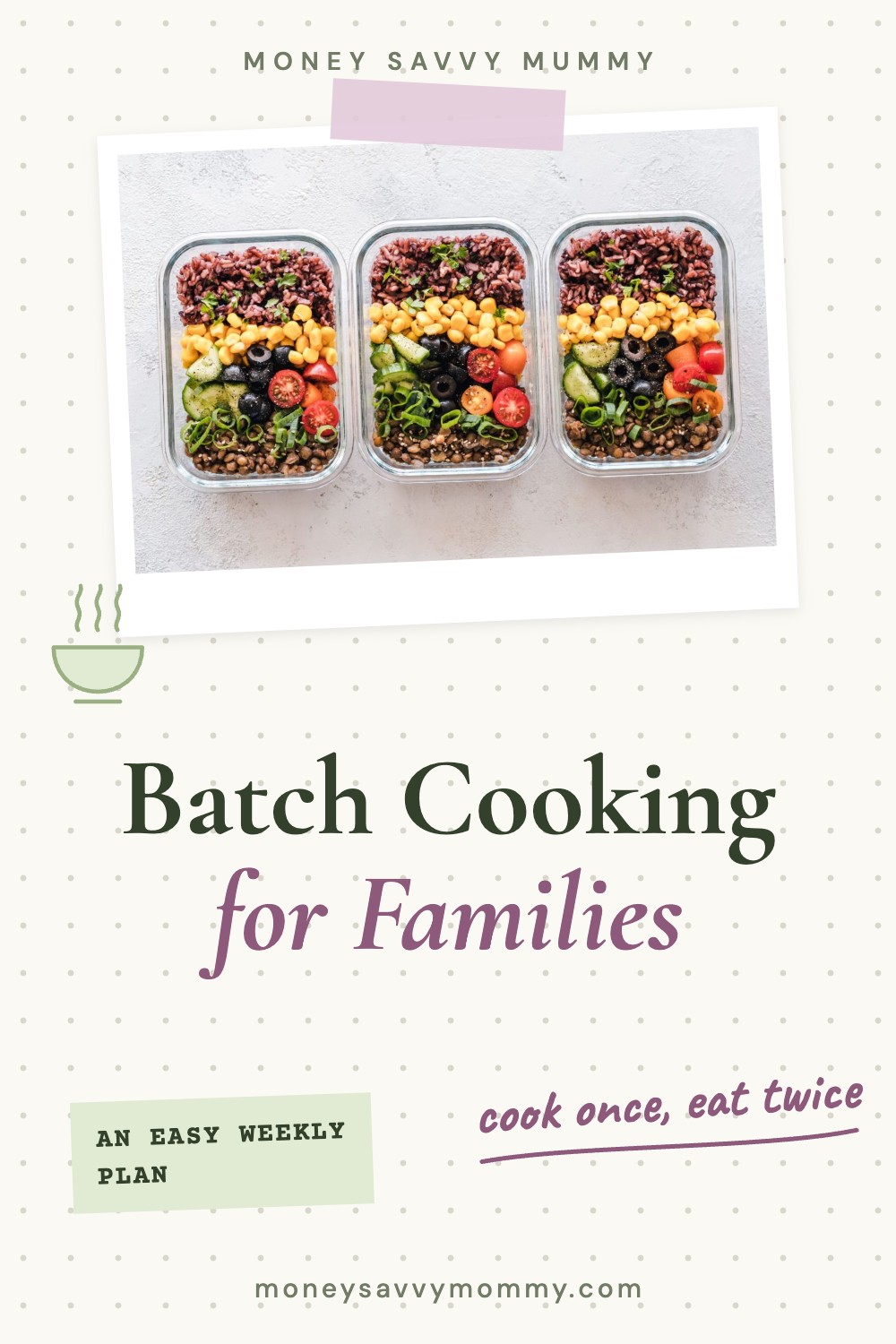
Batch cooking for families can make busy weeks feel much easier. It means cooking more than you need, then saving extra portions for another day. I love it because it helps me use food well, cuts down on last-minute spending and gives me an answer when we get home tired. You don’t need a huge freezer or a whole Sunday in the kitchen. Start with one meal, use foods your family already enjoys and freeze sensible portions. With a few labels and some simple food safety habits, batch cooking can become a helpful part of your normal routine.
Batch Cooking for Families: Start Small
First, choose one meal that freezes well. Pasta sauce, chilli, curry, soup and stew are all useful options. Pick something you already cook, rather than searching for complicated new recipes.
Next, make a little extra while you are cooking dinner. You could double the sauce, cook extra mince or add more vegetables to a soup. This feels much easier than planning several different meals at once.
However, don’t cook food your family won’t eat. A freezer full of unwanted meals isn’t helpful. Think about the evenings when you usually feel most rushed. Then make food that solves those particular problems.
My own batch cooking is usually simple. I love cooking, so I make extra portions of meals we already enjoy. I also keep the cupboards and freezer stocked. That way, I can pull together a meal from almost anything at the end of the month.
My quick fix: Cook one extra portion tonight and freeze it before anyone goes back for seconds. Do that once a week, and you’ll soon have a small choice of emergency meals.
Plan Your Batch Cooking Around Real Life
A good plan starts with your week, not with a list of recipes. Look at the evenings when work, clubs or homework make cooking harder. Those are the days to cover first.
Then check what you already have. Use food that needs eating soon, especially vegetables and open packets. Frozen vegetables are a staple in my freezer because they keep well and help us eat a healthy meal without much waste.
Before shopping, write down two or three meals. Add the ingredients you need to your list. This links batch cooking with a more organised food shop, rather than turning it into an extra expense. My tips for saving money on food shopping can help with this part too.
It also helps to keep a short freezer list. Write down what you freeze and cross it off when you use it. Otherwise, good food can disappear behind the frozen peas and get forgotten.
Use Flexible Ingredients
Choose ingredients that work in more than one meal. For example, cooked chicken could go into wraps, soup or a pasta bake. A tomato sauce could become a pasta meal, pizza topping or base for a bean dish.
Rice, pasta and potatoes are useful, but think about how you store them. Rice needs extra care because bacteria can grow if cooked rice sits at room temperature. Cool it quickly, refrigerate it promptly and follow current food safety advice.
Batch cooking doesn’t mean every meal must be homemade from scratch. You can freeze extra portions of a jar sauce with added vegetables. You can also freeze bread, grated cheese and some herbs. Small shortcuts still count when money and time are both tight.
Freezer Basics That Make Life Easier
Portion food before freezing it. Single portions work well for quick lunches, while family portions suit a busy evening. Flat containers also stack neatly and thaw faster than very deep ones.
Use containers that are suitable for freezing. Leave a little space at the top of liquids because they expand as they freeze. Strong freezer bags can save space too, but seal them carefully.
Label every portion with the meal and the date. This takes seconds, but it stops you playing freezer detective later. If the food needs a special instruction, write that down too, such as “defrost in the fridge”.
Keep older food near the front. Then use it first. This simple habit helps prevent waste and makes the freezer work harder for your budget.
Don’t fill the freezer with food while it is still warm. Warm food can raise the temperature around other items. Instead, cool it safely first, then freeze it in suitable portions.
What Freezes Well?
Most soups, stews, casseroles and sauces freeze well. Cooked vegetables can also work, although their texture may change slightly. Mashed potato, cooked pasta and rice can be frozen, but they need careful cooling and reheating.
Some foods are less successful. Creamy sauces may split, and salad leaves usually become limp. That doesn’t mean you must avoid them forever. Add fresh ingredients after thawing where possible.
For example, freeze a curry base and add fresh yoghurt when you serve it. Freeze pasta sauce, then cook fresh pasta on the day. This keeps the meal quick without making every part in advance.
Food Safety for Batch Cooking
Food safety matters every time you cook ahead. The Food Standards Agency has current advice on storing, cooling and reheating food, so check it if you are unsure.
Cool cooked food quickly, rather than leaving it on the worktop for a long time. Divide a large amount into shallow containers. Once it has cooled, put it in the fridge or freezer promptly.
Keep your fridge cold and avoid packing it so tightly that air cannot move. Store raw food away from ready-to-eat food. Wash your hands, boards and utensils after handling raw meat, poultry or eggs.
Thaw frozen food safely. The fridge is the easiest option for most meals. You can also use a microwave if you will cook or reheat the food straight away. Don’t thaw food on the kitchen counter.
Reheat food until it is steaming hot all the way through. Stir liquid meals so the middle gets hot too. Only reheat leftovers once, and check that the centre is hot before serving.
Rice deserves extra care. Cool it quickly, store it in the fridge and use it within the time advised by current official guidance. When in doubt, throw it out. Saving a portion isn’t worth risking your family’s health.
Make Batch Cooking Fit Your Budget
Batch cooking can lower waste, but it only saves money when you use the food. Start with ingredients you already buy. There is no need to purchase special containers, costly ingredients or a large freezer.
Buy vegetables that suit your meals and budget. Frozen vegetables are often handy because they last longer. They also make it easier to add colour and goodness to a quick meal.
Check the price per kilogram when comparing packs. A larger pack isn’t always cheaper, so do the maths. Also, only buy more if you have room to store and use it.
At the end of the month, I rely on meals that use cupboard and freezer basics. This helps me avoid an expensive top-up shop. For more ideas, you can also try a low-spend month plan without making life miserable.
Remember that your time has value too. I pay for a cleaner, which some people might see as extravagant. For me, it gives back time and energy after work. My rule is to work out what saves money and what saves time.
Keep a Small Recipe List
Write down the meals your family actually eats. Add the ingredients, portion sizes and any reheating notes. Soon, you’ll have your own short list of reliable freezer meals.
Keep the list near your freezer or food cupboard. Then you don’t need to remember everything after a long day. Also, ask your family which meals they would like to see again.
Try not to chase perfection. Some weeks you may cook three meals ahead. Other weeks, you may only freeze leftover soup. Both are useful. The aim is to make life a little easier, not to create another job.
FAQs
What is the best meal for batch cooking for families?
Start with meals your family already enjoys, such as chilli, soup, curry or pasta sauce. These are flexible and usually freeze well. Make one extra portion before trying a bigger cooking session.
How long can batch-cooked food stay in the freezer?
Freezing food keeps it safe for longer, but quality can fall over time. Label portions with the date and use them in a sensible order. For exact storage advice, check current Food Standards Agency guidance.
Can I freeze cooked rice?
Yes, but cooked rice needs careful handling. Cool it quickly, refrigerate or freeze it promptly, and reheat it until steaming hot. Follow current official advice, especially if you are unsure how long it has been stored.
Do I need special containers for batch cooking?
No. Use clean, suitable containers that close securely and can cope with freezing. Shallow containers help food cool more quickly. Always leave room for liquids to expand, and label each portion.
Batch cooking for families doesn’t have to take over your weekend. Start with one extra portion, keep your freezer organised and use food safety habits every time. I hope it gives you a little more breathing space on those busy evenings.
Most of all, make it work for your home. A simple meal waiting in the freezer can be a small thing that makes a big difference.
Pin this for later, so it’s there when you need it.